The Death of R.I.C.E.: Why Ice Stalls Soft-Tissue Injury Recovery
The Locker Room Default
For nearly half a century, the immediate response to any acute sports injury—whether a sprained ankle on the turf or a pulled hamstring in the weight room—has been a bag of ice. We have been conditioned to follow the R.I.C.E. protocol (Rest, Ice, Compression, Elevation) as if it were an absolute clinical requirement.
But the science has evolved, and the locker room hasn't caught up.
In fact, the very medical doctor who coined the R.I.C.E. acronym in 1978, Dr. Gabe Mirkin, officially recanted his own protocol. Modern clinical data has revealed a harsh truth: indiscriminate use of ice on acute injuries does not accelerate healing—it actively stalls it. For competitive athletes in Cache Valley striving to minimize time on the sidelines, understanding this shift is crucial.
Inflammation is the First Phase of Repair
To understand why ice is counterproductive, you must look at the natural biological timeline of soft-tissue healing. Your body repairs itself through three highly coordinated phases: Inflammation, Proliferation, and Remodeling. Old-school habits view inflammation as a design flaw that must be thermally suppressed. Modern pathophysiology recognizes it as the indispensable catalyst for repair.
When tissue damage occurs, your immune system immediately dispatches specialized inflammatory cells, known as macrophages, to the site of the trauma. These cells perform a vital task: they produce a specific hormone called Insulin-like Growth Factor-1 (IGF-1). IGF-1 is the primary cellular messenger required for muscle synthesis, tissue regeneration, and structural remodeling.
How Ice Stagnates the Healing Pipeline
When you apply a bag of ice to an acute injury, the extreme cold triggers rapid local vasoconstriction—the blood vessels constrict and narrow. This creates two distinct physiological bottlenecks:
The Circulatory Blockade: Vasoconstriction physically shuts down local circulation, blocking the arrival of macrophages and cutting off the supply of IGF-1 to the damaged tissue.
Lymphatic Stagnation: Your lymphatic system is the waste removal pipeline responsible for draining fluid buildup and cellular debris from an injury site. Unlike the cardiovascular system, it has no central pump; it relies entirely on local muscle contraction and interstitial pressure. Ice paralyzes local muscle firing and increases the viscosity of lymphatic fluid, causing cellular waste to pool and stagnate.
While ice is an excellent local anesthetic because it numbs pain signals, it does not accelerate tissue repair. It merely freezes the biological clock. Once you remove the ice bag, the body is forced to restart the inflammatory signaling process from the beginning, extending your overall recovery window.
The Modern Standard: Move, Don't Freeze
Instead of freezing the tissue and cutting off its supply lines, modern sports medicine protocols—such as the British Journal of Sports Medicine's P.E.A.C.E. & L.O.V.E. framework—advocate for optimized loading, vascular acceleration, and avoiding anti-inflammatories.
At VERVE Muscle Recovery in Logan, UT, we don't stagnate your body's natural defense systems; we optimize the environment so they can work at maximum efficiency.
Medical-Grade mHBOT: Instead of restricting blood flow with ice, our hyperbaric oxygen chambers super-saturate your blood plasma with pure oxygen. This delivers life-saving energy directly to hypoxic, injured tissues, fueling the natural inflammatory repair process without stalling it.
Full-Spectrum Red Light Therapy: Rather than freezing the cell, we charge it. Specific wavelengths of light trigger Cytochrome C Oxidase within the mitochondria, accelerating ATP production so your cells have the raw fuel needed to resolve inflammation and repair tissue rapidly.
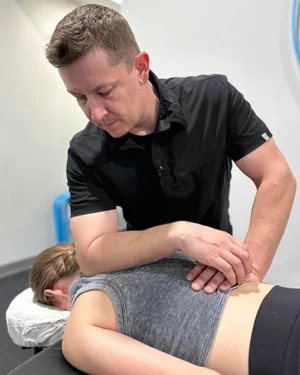
DNR™ (Dynamic Neurofascial Reprogramming): When an injury occurs, the brain locks the surrounding tissue in a state of involuntary "defensive guarding." Our 100% passive movement protocol provides the central nervous system with an immediate safety signal, releasing protective muscle bracing without the cellular trauma of ice or aggressive manipulation.
Stop stalling your recovery with outdated habits. Upgrade your recovery infrastructure and book your initial Neurological Audit at VERVE today.
Clinical Sources & Scientific References
Mirkin, G. (2015). Why Ice Delays Recovery. Dr. Gabe Mirkin's Insights. (Updating the original framework established in Mirkin, G., & Hoffman, M. (1978). The Sports Medicine Book).
Duchesne, B., et al. (2020). Soft-tissue injuries simply need PEACE and LOVE. British Journal of Sports Medicine, 54(2), 72-73.
Lu, H., et al. (2011). Macrophages recruited via CCR2 exert a highly differentiated transcriptional program required for muscle regeneration. Journal of Immunology, 186(12), 7195-7204.